11th July 2025
Have you ever wondered how cash registers came to be such a common part of shopping? They’re a familiar sight in stores today, but their history is often overlooked. From the clunky mechanical machines of the past to today’s sleek digital systems, cash registers have played a key role in shaping how we buy and sell. Here’s a simple timeline showing how they’ve evolved over the years.
The original purpose of the cash register was to stop employee theft. In the late 1800s, business owners had little control over cash handling, and it was common for staff to pocket money from sales. The solution came from an unexpected place – a saloon in Ohio.
In 1879, James Ritty, a bar owner from Dayton, Ohio, created the first version of a cash register to stop money from going missing from his till. Known as “Ritty’s Incorruptible Cashier”, the machine recorded sales using a series of buttons, levers, and gears. It didn’t print receipts and had no drawer for change, but it did make a loud ding sound with each transaction, alerting the owner that a sale had been made.
A few years later Ritty sold the rights to the machine, which were later bought by John H. Patterson. Patterson improved the design, added a cash drawer, and went on to found the National Cash Register Company (NCR) in 1884 – a name still linked to the industry today.
As retail and banking continued to grow in the early 1900s, cash registers became more advanced. NCR developed models that printed receipts, tracked sales, and helped with accounting. The machines were still entirely mechanical, powered by turning a crank or pressing keys, and often beautifully designed using brass with detailed engraving.
In the 1940s and 50s, electric motors began replacing hand cranks. This made cash registers easier to use and more efficient, speeding up transactions.
As computer technology advanced, cash registers became electronic. The 1970s saw the arrival of Electronic Cash Registers (ECRs), which could store product prices, calculate change, and print receipts automatically using thermal paper.
By the 1990s, most retailers were using Point of Sale (POS) systems, which linked the cash register to barcode scanners, card readers, and stock management software. This shift changed the role of the cash register from a simple till to a complete transaction process.
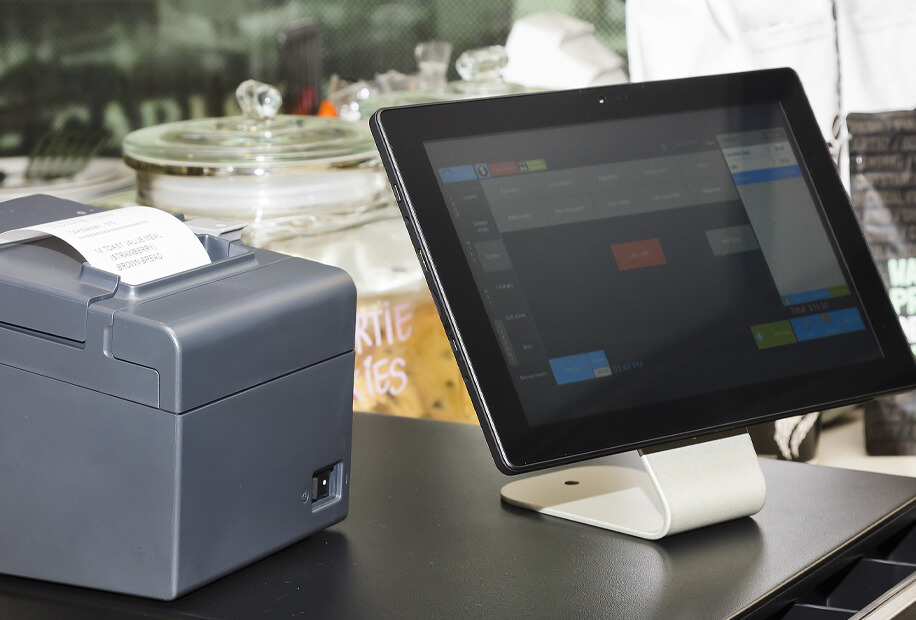
Today, cash registers look very different from how they were first invented. Many businesses now use cloud-based POS systems that run on tablets or smartphones. These systems can track sales in real time, send digital receipts, and integrate with e-commerce platforms.
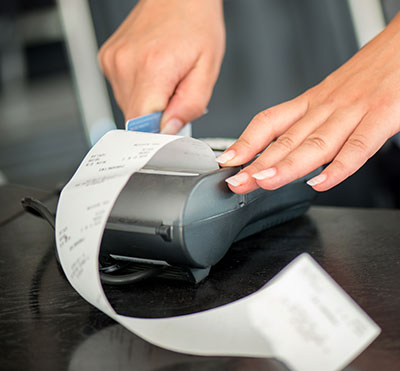
Despite the digital shift, thermal paper receipts remain highly used. Whether it’s a small café using a mobile card reader or a supermarket with self-service checkouts, the principle of recording a sale and giving the customer a record remains the same.
That classic ka-ching sound associated with cash registers didn’t just happen by accident. It was a built-in feature on early models to reassure owners that money had been handled and the drawer had opened. Even today, some apps and software use a similar sound effect – a reminder of the cash register’s history.
From its original design to stop theft in the 19th century to the new digital systems used by businesses today, the cash register has come a long way. Each stage of its development reflects changes in technology, retail habits, and customer expectations. What hasn’t changed is the need to record transactions clearly and reliably – something that remains just as important now as it was over 100 years ago.
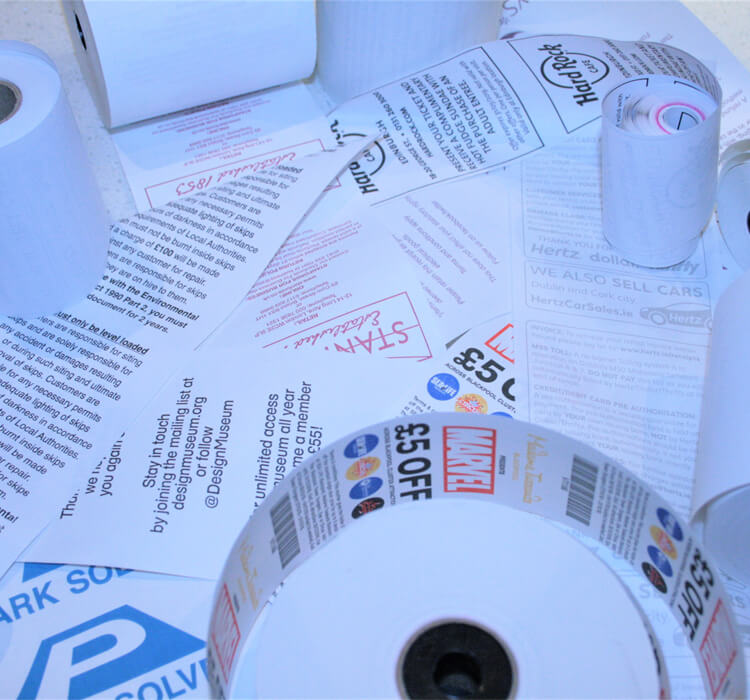
BPC UK has supported the evolution of cash registers for decades. As registers became faster and smarter, so did the demands for clearer, cleaner printouts. We’ve been supplying high-quality thermal paper rolls since 1977, with a selection of paper rolls available.
If you would like more information about our paper roll range, feel free to call us on 01772 622804 or email sales@bpcuk.com.